So what better day to be writing this blog than today, EARTH DAY? Earth Day is for EVERYONE. It is the one modern, secular, global festival—founded by an American peace activist in 1970—celebrated by one billion people in 193 countries.
Read More
So what better day to be writing this blog than today, EARTH DAY? Earth Day is for EVERYONE. It is the one modern, secular, global festival—founded by an American peace activist in 1970—celebrated by one billion people in 193 countries.
Read MoreI have good news to tell: For the Love of Form: Confessions of a Morphophiliac and its attendant book proposal are now ready to show to a publisher.
Read MoreIt’s been a year since my first “Legacy” blog. If you are still following along with me, I send you a big “thank you.” Here’s the update on The Book:
Read MoreSince I fell on January 4 and broke three ribs, I’ve had lots of downtime to consider this whole legacy project.
Read MoreThis will be my final blog of the year 2024.
Read MoreLast month I announced that I finished all thirty-six chapters of the rough draft of my book and placed them in the capable hands of my editor, Dorion Sagan. Every serious and competent writer should have not just a serious and competent editor but someone who understands and even intuits what the writer intends to say, and helps the writer say it even better.
Read MoreIn putting together the book, it became quite clear that I had two major mentors early in my life: my uncle, Philip Kaplan, and later Jane Kastner, Education Curator at the California Palace of the Legion of Honor Museum.
Read Moream thrilled to announce that not only have I finished the last chapter of the rough draft of my book, but that I have found the best of all possible editors: Dorion Sagan, a gifted science writer and the son of Lynn Margulis and co-author on many of her books.
Read MoreElectric Beings is about energy, especially electromagnetic energy (e.g., light and colors) and thermal energy (heat). There’s no doubt today that the nervous system runs on electricity.
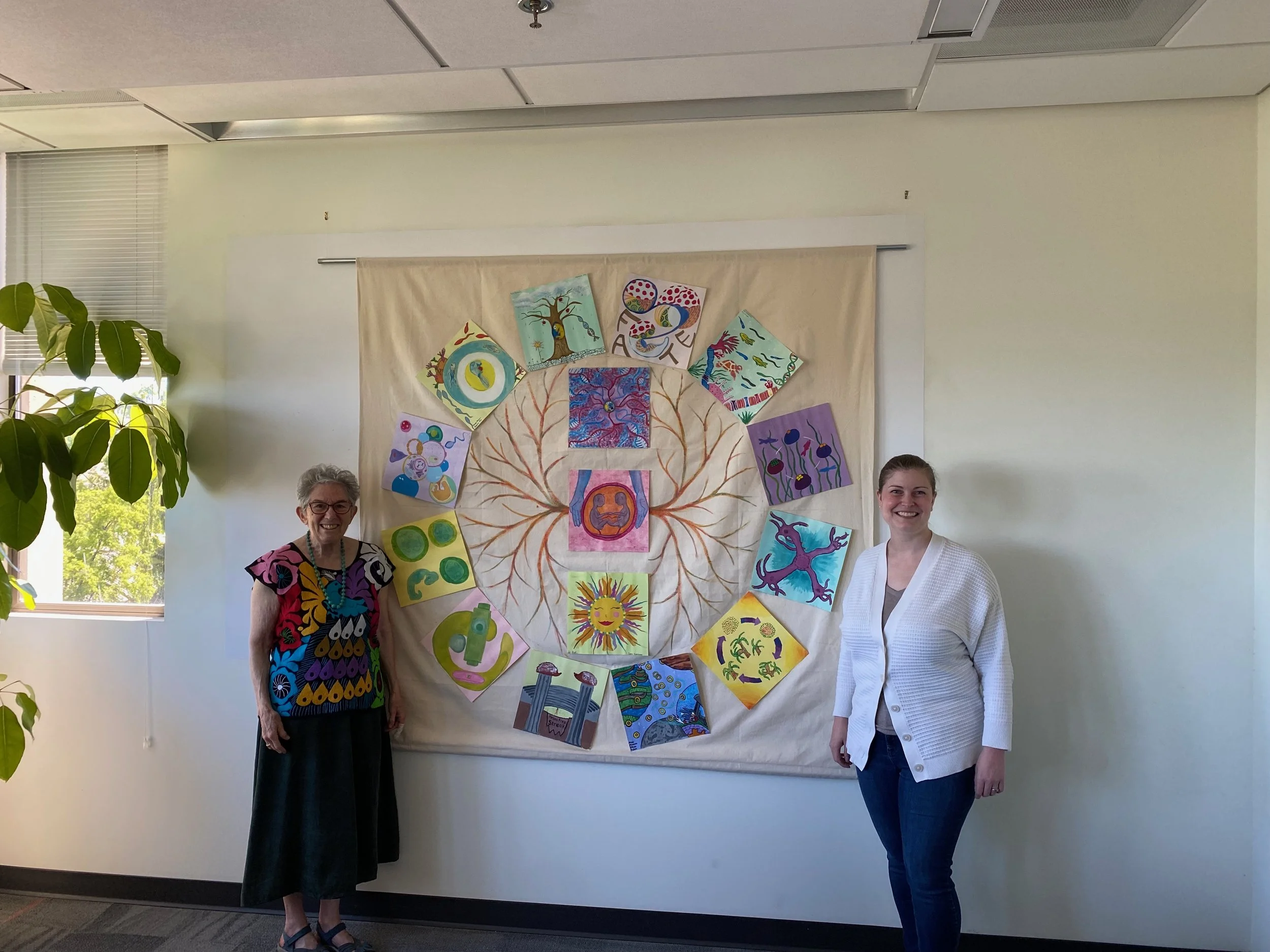
Read MoreSTEM curriculum becomes STEAM: Science, Technology , Engineering, ART and Math. Fifty years after the Alvarado Arts Workshop, it was time for me to be involved again as an artist in the schools, this time bringing art into a Developmental Biology classsroom.
Read MoreA trip to San Francisco brings back memories of the 1970s and working as an artist in the schools and community.
Read MoreTwo new exhibits: ScienceWorksMuseum and Belle Fiore Winery. And a new video animation from the Oregon Fringe Festival.
Read MoreMother’s Day in Rome: the feminist collective Lotta Femminista stages a large exhibition in popular Piazza Navona next to Bernini’s Four RIvers fountain. The exhibit showed how women are depicted in advertising and in the real world.
Read MoreIt’s a month since I announced my Legacy Project. You might be wondering where things stand.
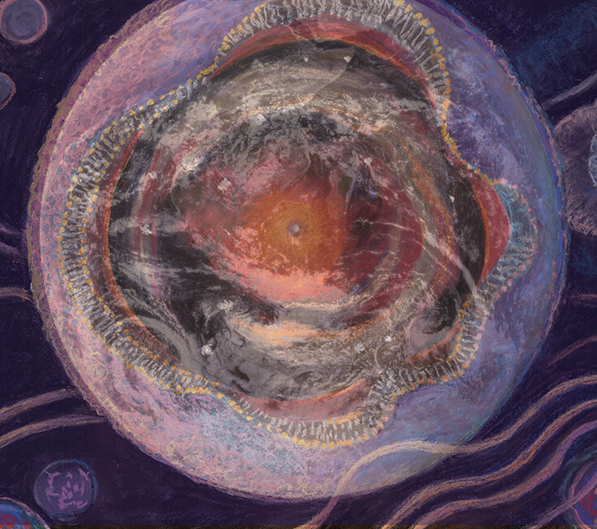
Read MoreI am honored that The Center for Humans and Nature has published an article about my work in its latest issue. The article is titled Life in the Cosmos: Micro and Macro and features some of my favorite paintings. The Center’s mission is to “explore and promote human responsibilities in relation to nature — the whole community of life.”
Read MoreUpon reaching my 80th birthday last year, I embarked on my Legacy Project with the goal of producing a book containing my favorite and most important works with related writings: blogs, autobiographical stories, philosophical musings, and why the arts are essential for human well-being.
Read MoreThe last part of my pilgrimage took me to Bilbao, then Rotterdam, and finally to Amsterdam.
Read MoreWhile visiting Liceo Scientifico Leonardo da Vinci in November 2023, two of the school’s lively young journalists interviewed me. Click on the magazine’s banner to read what they wrote.
Read MoreIn the film La Vacanza, the script called for a Countess. The film director enlisted me to play the Contessa Americana alongside the protagonists played by Vanessa Redgrave and Franco Nero.
Read MoreIn November of 2023, just two weeks after my 80th birthday, I went to Florence, Italy, one of the most beautiful cities in the world, home of the 15th century Italian Renaissance. The highlight of my journey was a visit to the Liceo Scientifico Leonardo da Vinci where I was a foreign exchange student in 1960. This video documents favorite momens of my visit.
Read More